Honkai Impact 3rd
- 4.0
- Rating
- 10.00M
- Installs
- Free
- Price

 Analysis by App-foxy
I went into Honkai Impact 3rd expecting a stylish mobile action game, but what kept me playing was the way each short battle feeds naturally into the next one. I choose a character, enter a compact fight, dodge danger, trigger attacks, collect the result, and then find a reason to improve the team before starting again. That rhythm is the real identity of this game, more than its science-fiction setting or dramatic presentation.
It is a free action game from COGNOSPHERE PTE. LTD., aimed at Teen players and available on Android from version 6.0 onward. The game has built a substantial audience, with over ten million installs, a 4.0 average from around 458 thousand ratings, and roughly 29 thousand written reviews. Those figures suggest a well-established mobile title rather than a brief experiment, although they do not remove the need to decide whether its style and progression suit you.
My overall impression is positive, with an important qualification: this is best for someone who enjoys learning character timing, switching between fighters, and gradually improving a roster. If you want a quiet game that can be played without attention, or a simple action title with no long-term progression, I would point you elsewhere. The battles are immediate, but the larger experience asks you to understand systems, manage upgrades, and accept some repetition.
You May Also Like

 Blood Strike: 2.5 Anniversary
Blood Strike’s Loadouts Turn Every Drop Into a Tactical Gamble
A close look at Blood Strike’s custom loadouts: how fast access to signature weapons reshapes its battle royale rhythm, rewards preparation, and narrows the gap between fights.

 Pandora - Music & Podcasts
Pandora’s Music Is Easy to Start, but Harder to Recover
Pandora’s strength is its low-effort path from a seed to a station. Its weak spot is how much confidence it asks you to place in connection, setup, and quiet recovery.

 8 Ball Pool
 Is Built on Rivalries, Rematches, and Routine
A close look at the rivalries, rematches, shared routines, and unanswered safety questions that turn a quick pool match into a persistent mobile community.

 Samsung Music
’s Quiet Strength Is Playing What You Already Own
Its reach comes less from spectacle than from dependable access to a personal library. That simplicity is both the app’s strongest retention engine and its ceiling.

 AccuWeather: Weather Radar
AccuWeather Review: A Quick, Clear Forecast for Everyday Decisions
For everyday plans, the best forecast is the one you can understand quickly. AccuWeather makes rain timing, radar, and local conditions easy to act on, with a few trade-offs.

 Hill Climb Racing
Why Hill Climb Racing Still Turns Crashes Into One More Run
A tiny car, a bumpy hill and one more upgrade: Hill Climb Racing keeps resurfacing because its simple chaos makes every near-miss feel personal.
More From Our News Desk
View All News


From the first strike to the next session
I find that the most useful way to judge Honkai Impact 3rd is to notice where a session slows down: sometimes the obstacle is a fight that needs better timing, and sometimes it is simply a team or upgrade decision that deserves a pause. I’ll focus next on the small checks and habits that help me return to the action with a clearer plan, rather than treating every snag as a reason to spend or restart.
The first action feels direct, but not shallow
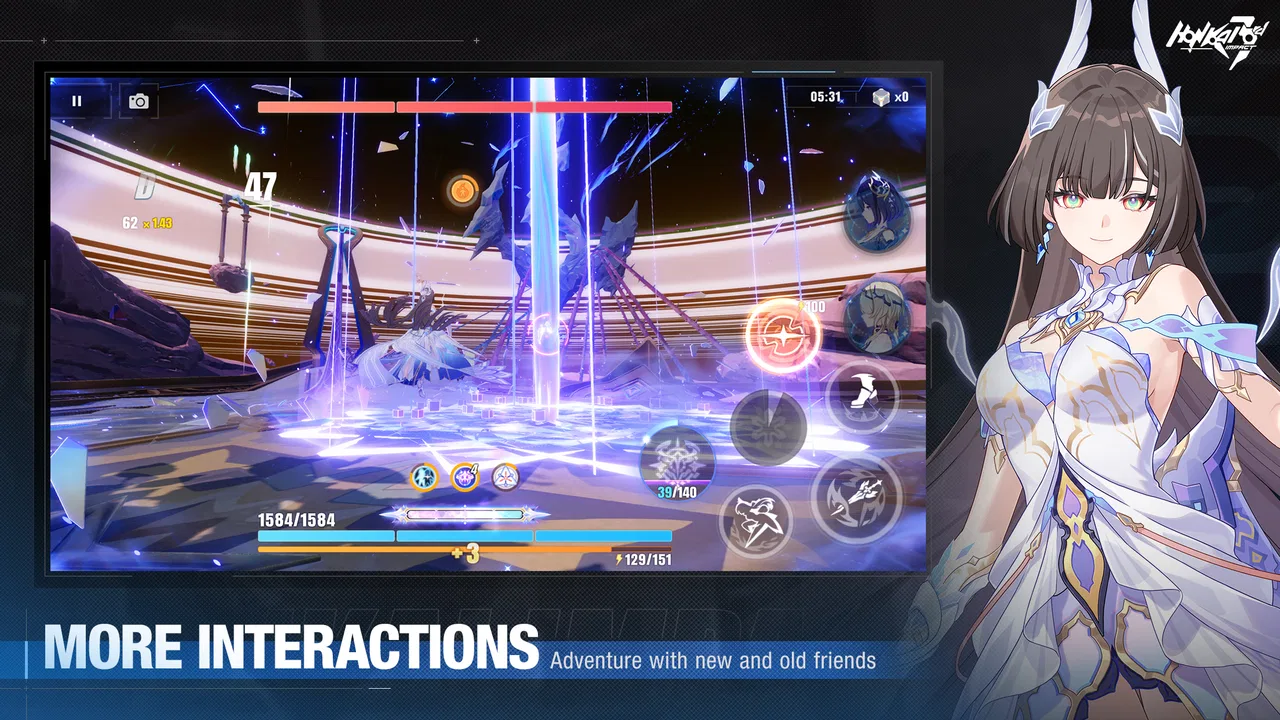
The opening appeal is easy to understand. A battle begins, enemies move into range, and I am immediately making decisions rather than waiting through a long setup. Attacks have a satisfying sense of contact, while dodging and positioning matter because standing still and repeatedly tapping is rarely the best answer. Even when a fight is short, I feel that my input has changed its outcome.
That directness separates the game from many mobile role-playing alternatives that put more emphasis on automatic combat. Auto-play can be convenient in this category, but it also makes the player feel like a spectator. Here, the enjoyable moments come from staying involved: watching an enemy’s movement, choosing when to evade, and understanding which attack is worth saving for a more dangerous moment.
The game’s science-fiction adventure presentation gives those encounters a strong frame. Characters, enemies, and environments are presented with a dramatic anime-inspired style, so the action does not feel like a collection of disconnected arenas. I found that visual identity helpful when learning the roster because each fighter feels like more than a different set of numbers. The presentation gives the battles personality, even when the underlying routine is familiar.
Touch controls are naturally more demanding than a controller, especially when several enemies surround the character. I had to keep my fingers comfortable and avoid treating every fight as a frantic button-mashing exercise. The better approach is to use movement deliberately, leave room to react, and learn which attacks can safely be used during pressure. Players who dislike virtual controls should try a few battles before committing to the longer progression.
The feedback rhythm rewards attention
The strongest part of the combat loop is its feedback. A successful dodge creates a clear opening; a well-timed attack produces a burst of momentum; a good character switch can turn a messy encounter into a controlled one. I do not need every battle to be difficult for the system to feel responsive. The pleasure comes from seeing a small improvement immediately reflected in the fight.
This is also where the game asks more from me than a typical casual action app. It is not enough to know that one character is stronger on paper. I need to notice how a team behaves together, which fighter is comfortable against a certain enemy pattern, and when a powerful ability is more valuable than using it at once. That learning process is gradual, but it gives the action a welcome layer of mastery.
A useful habit is to treat the first encounter with a new enemy as observation rather than a race to finish. I watch its range, pause before spending the strongest attack, and use the opening attempt to learn where the danger comes from. This reduces wasted retries and makes later runs feel earned. It is a small change in attitude, but it turns repetition into practice instead of simple grinding.
The game is also more enjoyable when I avoid building my entire routine around one favorite character. Personal attachment is part of the appeal, yet different situations can expose weaknesses in a narrow team. Experimenting with the available roster helps me understand the combat system and prevents the reward loop from becoming a single repetitive combo.
Rewards give the action a practical purpose
Winning a battle matters because it moves the broader account forward. The reward is not only the satisfaction of surviving an encounter; it also supports upgrades, roster development, and the next attempt at a more demanding challenge. That connection between action and progress is what makes another run feel worthwhile.
I particularly like the way the reward stage encourages a quick review of what happened. If a fight felt difficult, I can ask whether the problem was my timing, my team, or the need to improve equipment and abilities. That question is more useful than automatically spending every resource. Progress is smoother when I identify the actual bottleneck instead of upgrading randomly.
My practical advice is to avoid treating every reward as something that must be claimed and spent immediately. Keep enough flexibility to respond to a character or team that you genuinely enjoy using. Early enthusiasm can lead to scattered investment, and a broad but shallow roster may feel less effective than a smaller group that I understand well.
The free entry point makes it easy to test this approach. There are in-app purchases ranging from $0.99 to $99.99 per item, so the store economy is part of the experience and deserves attention. I would begin as a free player, learn the combat, and decide later whether spending improves my enjoyment rather than using purchases to compensate for not understanding a battle.
That distinction matters. If I am losing because I am mistiming dodges or choosing an awkward team, buying something may not solve the real problem. Spending can shorten some progression frustrations, but it cannot replace familiarity with the action. For me, the most satisfying rewards are the ones that follow a better performance, not simply a larger investment.
Resetting the session is part of the design
After a battle, the game naturally resets my attention. I check the outcome, consider an upgrade, adjust the team, and decide whether I have time for one more encounter. This makes it suitable for short bursts, especially when I want an active game rather than an idle one. A single session can feel complete without requiring me to remain in the game for an entire evening.
At the same time, the reset is not always a clean stopping point. Seeing a new objective, a better upgrade path, or an unfinished challenge can make “one more battle” surprisingly easy to accept. That is not a flaw unique to this title, but it is worth recognizing if I am trying to protect a fixed amount of free time. I found it helpful to decide before playing whether I was doing a quick run or settling in for progression.
The loop works best when I set a specific purpose for the session. I might play to practice a character, clear a particular stage, or gather what is needed for one improvement. Without that goal, the reward screen can lead me into menus and upgrades without a clear plan. A little structure keeps the game from feeling like an endless sequence of tasks.
This is one of the less obvious strengths of the design: the reset is not merely a pause between levels. It is a planning moment. I can turn a failed attempt into information, a successful attempt into resources, and a resource shortage into a reason to revisit an easier activity. Players who enjoy optimizing routines will find more depth here than the fast combat initially suggests.
Story, atmosphere, and the cost of commitment
The adventure side gives context to the action and helps the game feel larger than a score-chasing brawler. I enjoyed having a reason to care about the characters and their setting, particularly because the dramatic tone makes victories and setbacks feel connected to an ongoing journey. The science-fiction backdrop is not just decoration; it shapes the mood of the experience.
However, the broader presentation can also make the game feel demanding for someone who wants a quick, self-contained session. There are characters to understand, progression choices to follow, and a continuing sense that the roster can be developed further. I would not recommend it to a player who prefers a straightforward arcade structure where the main goal is simply to beat a high score.
The Teen rating is a useful signal for families deciding whether it matches their household. I would still judge the tone personally, because the game’s action and dramatic character presentation may not appeal to every younger player. It is more suitable for someone comfortable with anime-styled science-fiction action than for a child looking for a gentle cartoon game.
Device compatibility is also worth checking before downloading. The Android requirement begins at version 6.0, which covers many devices, but compatibility alone does not describe how comfortable a particular phone will feel during active combat. A player with a smaller screen or an older device should pay attention to control comfort and overall responsiveness during the first sessions rather than assuming that installation guarantees an ideal experience.
Who will enjoy it, and who should skip it?
I would recommend this game to players who want a mobile action experience with a real learning curve. It suits people who enjoy switching between characters, practicing timing, improving a team, and returning to earlier content with a better understanding of the systems. It is also a good fit for someone who likes a strong visual identity and wants progression to give short battles a longer purpose.
It is less suitable for anyone who dislikes repeated encounters, resource decisions, or games that gradually expand beyond their first few minutes. If your ideal mobile game is a relaxed puzzle, a pure offline arcade challenge, or a title where every character is immediately simple to understand, this may feel busy. Players who want to avoid in-app purchases entirely can still begin without paying, but they should be comfortable with a progression model that includes optional purchases.
Compared with a typical auto-battler, this offers more personal control and more room for mechanical improvement. Compared with a traditional console action game, it is easier to approach in short sessions but more tied to long-term roster development. Compared with a simple fighting game, it places greater emphasis on adventure and progression rather than only mastering a fixed set of matchups. Those trade-offs explain its appeal and its limits.
My verdict on the action-reward-reset loop
What keeps me returning is the complete cycle: I act, receive immediate feedback, earn something useful, reset my plan, and begin again with a clearer objective. The loop is strongest when I am actively learning rather than merely repeating the easiest stage. A successful session leaves me with either a better result or a better understanding of why the previous attempt went wrong.
The game is not frictionless. The roster and progression can ask for patience, touch controls demand attention, and the presence of purchases means I need to manage expectations. Some players will also find that the dramatic presentation and continuing objectives are more commitment than they wanted from a phone game. I would not call those problems deal-breakers, but they should be part of the decision.
For my taste, the free download makes Honkai Impact 3rd worth trying if responsive mobile combat is the priority. I would start slowly, focus on learning one team, save resources until I understand what I enjoy, and use short sessions with a clear goal. If that routine sounds satisfying, the game has enough action and progression to hold attention well beyond its first battles. If it sounds like work, a simpler action game will probably be the better choice.
COGNOSPHERE PTE. LTD. continues to present this as a substantial mobile adventure rather than a disposable time-filler, and the current version is 9.0.0. My final recommendation is therefore specific: try it for the combat loop, not merely for the visuals. If the feeling of dodging correctly, improving a team, and immediately testing that improvement gives you a reason to start another session, you have found the game’s central appeal.
FAQs for Honkai Impact 3rd
01What is Honkai Impact 3rd about?
Honkai Impact 3rd is a story-driven action RPG set in a science-fiction world threatened by a destructive force known as the Honkai. You control teams of Valkyries, each with different combat styles, weapons, and abilities. The game combines fast real-time battles with cinematic story chapters, character development, equipment upgrades, events, and several side modes that add variety beyond the main campaign.
02Can Honkai Impact 3rd be played offline?
No, Honkai Impact 3rd generally requires an internet connection to play. The game connects to its servers for account verification, story content, events, updates, and multiplayer-related features. A stable Wi-Fi or mobile data connection is recommended, especially when downloading large resource packages. Players should also expect regular updates, which may require additional storage space and data usage.
03Is Honkai Impact 3rd free to download and play?
Honkai Impact 3rd is free to download, but it includes optional in-app purchases. You can progress through the story and enjoy many game modes without spending money, although paid currency can be used for character supplies, equipment, costumes, and other resources. Progress may feel slower for free players, so managing crystals and choosing which banners to use them on is important.
04Does Honkai Impact 3rd require a powerful phone or tablet?
The game can run on a range of compatible Android and iOS devices, but its detailed graphics and real-time combat can be demanding. Older phones may experience heat, frame-rate drops, longer loading times, or storage limitations. Before installing, check the current store requirements and make sure you have enough free space for the initial download as well as future updates and optional game resources.
05Is Honkai Impact 3rd suitable for new players?
New players can enjoy Honkai Impact 3rd, but the large amount of content may feel overwhelming at first. The game introduces several currencies, upgrade systems, character types, equipment options, and time-limited events. The early story and tutorials provide a useful starting point, while beginner guides can help with team building and resource management. Players should also be aware that some story themes include serious, emotional, and mature moments.
Pros
- Fast
- responsive combat with satisfying combos and dodges.
- Large roster of Valkyries with distinct playstyles to master.
- Frequent events provide new challenges and limited-time rewards.
- Strong anime presentation with polished cutscenes and voice acting.
- Generous free-to-play rewards for regular players and newcomers.
Cons
- The download and updates require substantial storage space.
- Progression systems can feel overwhelming because of their complexity.
- Top-tier gear may require significant time or premium currency.
- Later story chapters can be difficult without careful team building.
- Some older content shows noticeable differences in visual quality.

Honkai Impact 3rd
Gallery